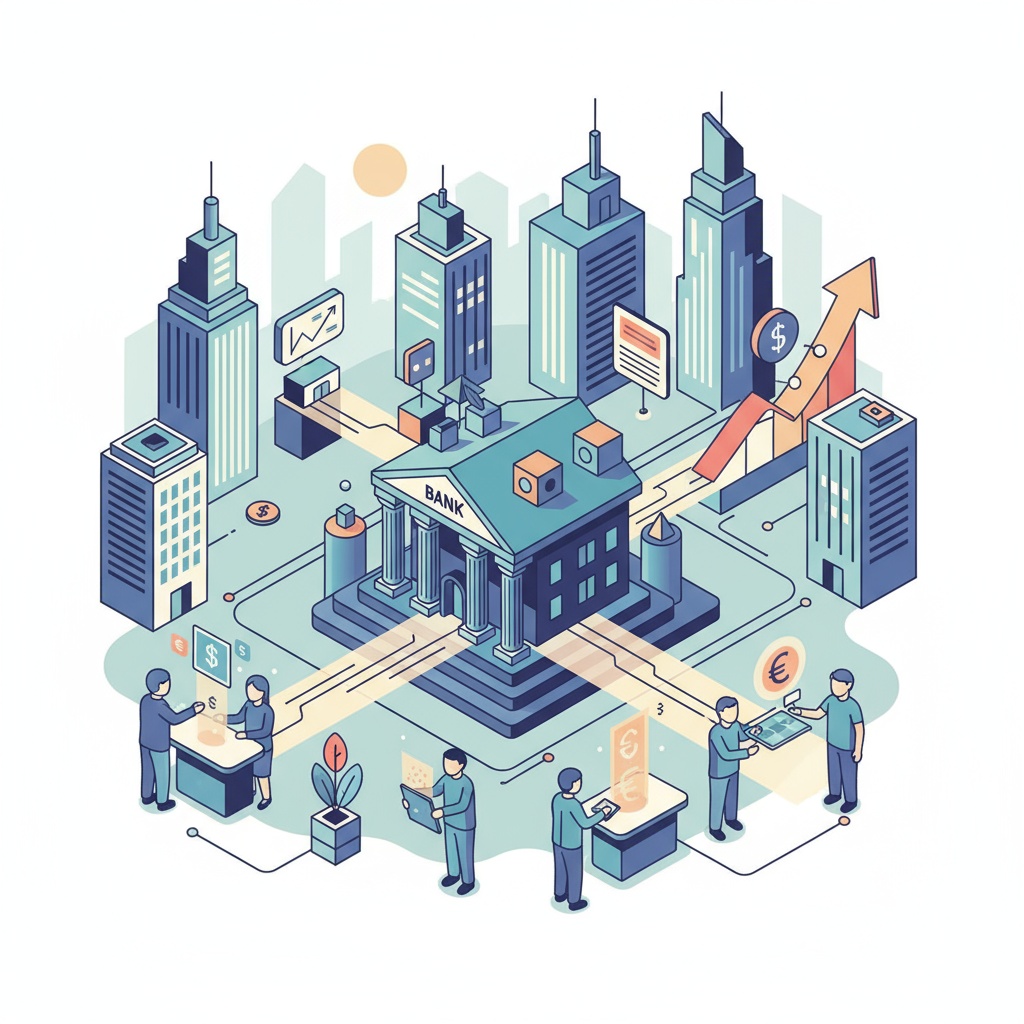
Fintechs and Digital Banking Transformation: Your Blueprint for Financial Innovation
Reading time: 12 minutes
Ever wondered why your grandmother now manages her entire banking portfolio from her smartphone, while your local bank branch sits eerily empty? You’re witnessing the most dramatic financial revolution since the invention of the ATM. Let’s unpack how fintech disruptors are fundamentally reshaping banking—and what it means for your financial future.
What You’ll Discover:
- How digital-first banks are outmaneuvering traditional institutions
- The strategic technologies driving financial transformation
- Real-world success stories and cautionary tales
- Practical insights for navigating this evolving landscape
Well, here’s the straight talk: The banking industry isn’t just evolving—it’s experiencing a complete metamorphosis. And understanding this transformation isn’t just academic curiosity; it’s essential financial literacy for the modern era.
Table of Contents
- Understanding the Fintech Revolution
- Digital Banking: Beyond Online Services
- Technologies Powering the Transformation
- Success Stories and Market Disruptors
- Navigating Challenges and Risks
- Your Financial Future: Preparing for What’s Next
- Frequently Asked Questions
Understanding the Fintech Revolution
The term “fintech” sounds like Silicon Valley jargon, but it represents something profoundly practical: financial technology that solves real problems faster, cheaper, and more conveniently than traditional banking ever could.
The Paradigm Shift: From Branch to App
Remember when depositing a check meant taking your lunch break to stand in line? Those days are vanishing rapidly. According to a 2023 McKinsey report, digital banking adoption surged to 89% among consumers in developed markets, with 73% reporting they primarily use mobile apps for financial transactions.
But here’s what’s genuinely revolutionary: This isn’t just about moving existing services online. Fintechs are fundamentally reimagining what financial services can be.
Quick Scenario: Imagine you’re a freelancer receiving payments from five different countries. Ten years ago, this meant navigating currency exchanges, international wire fees, and waiting 3-5 business days for funds to clear. Today, platforms like Wise (formerly TransferWise) process these transactions in hours with transparent fees that are 83% lower than traditional banks, according to their own comparison data.
The Three Pillars of Fintech Innovation
- Accessibility: Banking services reaching previously underserved populations
- Efficiency: Automating processes that once required human intervention
- Personalization: AI-driven insights tailored to individual financial behaviors
The World Bank’s 2021 Global Findex Database revealed that 1.4 billion adults gained access to financial services between 2014 and 2021—largely through mobile money and digital banking platforms. That’s not incremental improvement; that’s transformational impact.
Digital Banking: Beyond Online Services
Let’s clear up a common misconception: Digital banking isn’t simply traditional banking with a website. It’s an entirely different operating model built from the ground up for the digital age.
Traditional Banks vs. Digital-First Institutions
| Aspect | Traditional Banks | Digital-First Banks |
|---|---|---|
| Infrastructure Cost | High (physical branches) | Low (cloud-based systems) |
| Account Opening Time | Days to weeks | Minutes |
| Operating Hours | Limited branch hours | 24/7 service availability |
| Customer Acquisition Cost | $200-$350 per customer | $30-$70 per customer |
| Feature Update Cycle | Quarterly or annually | Weekly or continuous |
The Customer Experience Revolution
Digital banking isn’t winning because of technology alone—it’s winning because of experience design. Consider Chime, the US-based neobank that reached 13 million customers by 2023. Their “SpotMe” feature allows eligible customers to overdraft up to $200 without fees—a simple innovation that addresses a genuine pain point affecting millions.
Pro Tip: When evaluating digital banking options, look beyond interest rates and fees. The real value lies in features that save you time and reduce financial stress—like automatic savings triggers, instant spending notifications, and intelligent budgeting tools.
Technologies Powering the Transformation
Behind every seamless banking interaction lies sophisticated technology infrastructure. Let’s demystify the key players reshaping financial services.
Artificial Intelligence and Machine Learning
AI isn’t science fiction in banking—it’s powering decisions worth trillions. JPMorgan’s COiN platform reviews commercial loan agreements in seconds, work that previously consumed 360,000 hours of legal review annually. For consumers, AI manifests in:
- Fraud Detection: Real-time transaction monitoring identifying suspicious patterns with 95%+ accuracy
- Personalized Recommendations: Analyzing spending patterns to suggest savings opportunities
- Chatbots and Virtual Assistants: Handling 80% of routine customer inquiries without human intervention
Blockchain and Distributed Ledger Technology
Beyond cryptocurrency hype lies genuinely transformative infrastructure. DBS Bank in Singapore processed over $15 billion in blockchain-based trade finance transactions in 2022, reducing processing times from days to hours while enhancing transparency.
Cloud Computing: The Invisible Backbone
Marcus by Goldman Sachs launched its digital banking platform entirely on cloud infrastructure, enabling them to scale from zero to over 10 million customers within five years—a feat impossible with traditional banking technology stacks.
Technology Adoption Impact Comparison
Percentage of financial institutions actively deploying these technologies (2023 data)
Success Stories and Market Disruptors
Case Study: Revolut’s Meteoric Rise
Launched in 2015 with a simple premise—transparent foreign exchange without hidden fees—Revolut exemplifies fintech’s disruptive potential. By 2023, they served over 30 million customers across 35 countries. Their secret? Continuously expanding services based on user data.
What started as a currency exchange app evolved into a comprehensive financial super-app offering:
- Multi-currency accounts with real exchange rates
- Commission-free stock trading
- Cryptocurrency buying and selling
- Budgeting and analytics tools
- Travel insurance and airport lounge access
Key Insight: Revolut didn’t try to replicate traditional banking—they built services around how people actually use money in a globalized, digital world.
Nubank: Financial Inclusion at Scale
In Brazil, where traditional banking historically excluded millions, Nubank launched a no-fee credit card in 2014. By leveraging mobile-first design and alternative credit scoring methods, they grew to 70 million customers by 2023, making them Latin America’s largest fintech.
Their impact transcends numbers. As founder David Vélez notes: “We’re not just offering cheaper banking—we’re bringing millions into the financial system for the first time.”
Traditional Banks Fighting Back: DBS Bank’s Transformation
Not all success stories belong to startups. Singapore’s DBS Bank embraced digital transformation so comprehensively that Euromoney named them “World’s Best Digital Bank” five years running. Their approach:
- Cultural Overhaul: Sending 300 employees to work at startups to absorb innovation mindset
- API First: Opening 155 APIs for third-party developers
- Customer Obsession: Using journey mapping to eliminate friction points
Result? Digital customer engagement increased 130%, while cost-to-income ratio decreased by 10 percentage points—proving legacy institutions can compete when they commit fully.
Navigating Challenges and Risks
The fintech revolution isn’t without complications. Let’s address the elephants in the digital banking room.
Challenge #1: Security and Fraud Concerns
Digital banking’s convenience creates vulnerability. The FBI’s Internet Crime Complaint Center reported $3.4 billion in losses from financial fraud in 2020, with digital channels representing the fastest-growing attack vector.
How Leading Fintechs Address This:
- Biometric authentication (fingerprint, facial recognition)
- Multi-factor authentication as standard
- Real-time fraud monitoring with instant alerts
- Card controls allowing customers to freeze/unfreeze instantly
Practical Protection Strategy: Enable every security feature your banking app offers. The 30 seconds spent setting up biometric login could save you months of fraud recovery headaches.
Challenge #2: Regulatory Compliance Complexity
Fintechs operate in a regulatory maze that varies dramatically by jurisdiction. Europe’s PSD2 (Payment Services Directive) requires open banking, while the US maintains a fragmented state-by-state approach.
Monzo, a UK digital bank, spent over £3 million and 11 months obtaining their banking license—a barrier that protects consumers but slows innovation. The regulatory tightrope: sufficient oversight to ensure stability without stifling beneficial innovation.
Challenge #3: Digital Divide and Financial Exclusion
While fintechs democratize access in some ways, they can exclude others. The Federal Reserve reports that 5% of US adults remain unbanked, many lacking smartphones or reliable internet necessary for digital-only banking.
Emerging Solutions:
- Offline-capable features for areas with poor connectivity
- SMS-based services for basic phone users
- Partnerships with retail outlets for cash deposits/withdrawals
Your Financial Future: Preparing for What’s Next
The transformation isn’t slowing—it’s accelerating. Here’s your strategic roadmap for staying ahead of the financial services curve:
Immediate Actions (Next 30 Days)
1. Audit Your Current Banking Setup
Ask yourself: Am I paying fees that digital alternatives would eliminate? Track every fee you pay for three months—you might be shocked to discover $200-$500 annually in charges that are completely avoidable with digital banking alternatives.
2. Test-Drive a Fintech Service
Start small. Open a secondary account with a digital-first bank. Many people keep traditional accounts for familiarity while gradually shifting daily transactions to fintech platforms. This hybrid approach lets you experience benefits without feeling vulnerable.
3. Master Your Financial Data
Most digital banking apps offer spending analytics. Actually use them. Understanding your financial patterns is the first step toward meaningful optimization. Apps like Mint or YNAB (You Need A Budget) integrate with multiple accounts for comprehensive visibility.
Medium-Term Strategy (3-12 Months)
4. Embrace Open Banking Opportunities
As open banking matures, third-party services will access your financial data (with permission) to provide better insights, automatic bill negotiation, and optimized savings strategies. Companies like Plaid are building this infrastructure now.
5. Diversify Your Financial Ecosystem
Don’t put all your eggs in one basket—whether traditional or digital. The optimal 2024 financial setup likely combines:
- A traditional bank for stability and physical services when needed
- A digital bank for day-to-day transactions with superior UX
- Specialized fintech services for investing, international transfers, or cryptocurrency
Long-Term Positioning (1-3 Years)
6. Stay Educated on Emerging Trends
Central Bank Digital Currencies (CBDCs) are coming. Over 90 countries are exploring digital currency issuance. Understanding how these government-backed digital currencies differ from both traditional money and cryptocurrencies will be crucial financial literacy.
7. Develop AI Literacy
Financial advice is increasingly AI-powered. Learning to evaluate, trust, and effectively utilize AI-generated financial insights will distinguish financially successful individuals in the coming decade.
The Bigger Picture
This transformation extends beyond banking convenience—it’s reshaping economic participation itself. As Chris Skinner, fintech author and commentator, observes: “The difference between financial services in 2010 and 2025 will be greater than the difference between 1950 and 2010.”
The question isn’t whether to engage with digital banking transformation—it’s how strategically you’ll navigate it. Those who view this as merely technology adoption will miss the point. This is fundamentally about taking greater control of your financial life through tools that were unimaginable a decade ago.
Your Personal Challenge: Six months from now, will you still be paying unnecessary fees and accepting suboptimal financial services out of habit? Or will you have leveraged this transformation to save money, gain insights, and access opportunities previously unavailable to you?
The infrastructure is built. The services are proven. The transformation is happening with or without you. Your move.
Frequently Asked Questions
Are digital-only banks as safe as traditional banks?
In developed markets, digital banks operating with proper banking licenses offer equivalent safety to traditional banks. In the US, FDIC insurance covers up to $250,000 per depositor regardless of whether the bank has physical branches. In Europe, similar protections exist through national deposit guarantee schemes. The key is verifying that your digital bank has proper regulatory authorization and deposit insurance. Security-wise, digital banks often employ more advanced fraud detection than traditional banks, though they face different risk profiles. Always verify licensing status before depositing significant funds.
What happens to my money if a fintech company goes out of business?
This depends on the fintech’s structure. If it’s a licensed bank, your deposits are insured up to regulatory limits ($250,000 FDIC in the US). Many fintechs, however, are “banking-as-a-service” platforms partnering with licensed banks—your money is actually held by the partner bank and remains protected. Companies like Chime and Varo explicitly clarify their banking partnerships. Payment processors and non-bank fintechs follow different rules, which is why reading terms carefully matters. The safest approach: verify deposit insurance and understand whether you’re dealing with a licensed bank or a technology platform partnered with one.
How do I choose between the hundreds of fintech banking options available?
Start by identifying your primary pain point with current banking: Are you paying high fees? Need better international transfer options? Want superior budgeting tools? This narrows options significantly. Then evaluate based on: (1) Regulatory standing and deposit insurance, (2) Fee structure for your typical transactions, (3) Customer service quality and hours, (4) Integration with other financial tools you use, and (5) User experience through app reviews and trial periods. Don’t chase features you won’t use. The “best” fintech is highly personal—what works for a freelancer receiving international payments differs dramatically from what benefits someone seeking automated savings. Most allow quick account opening, so test-driving two or three before committing is practical.