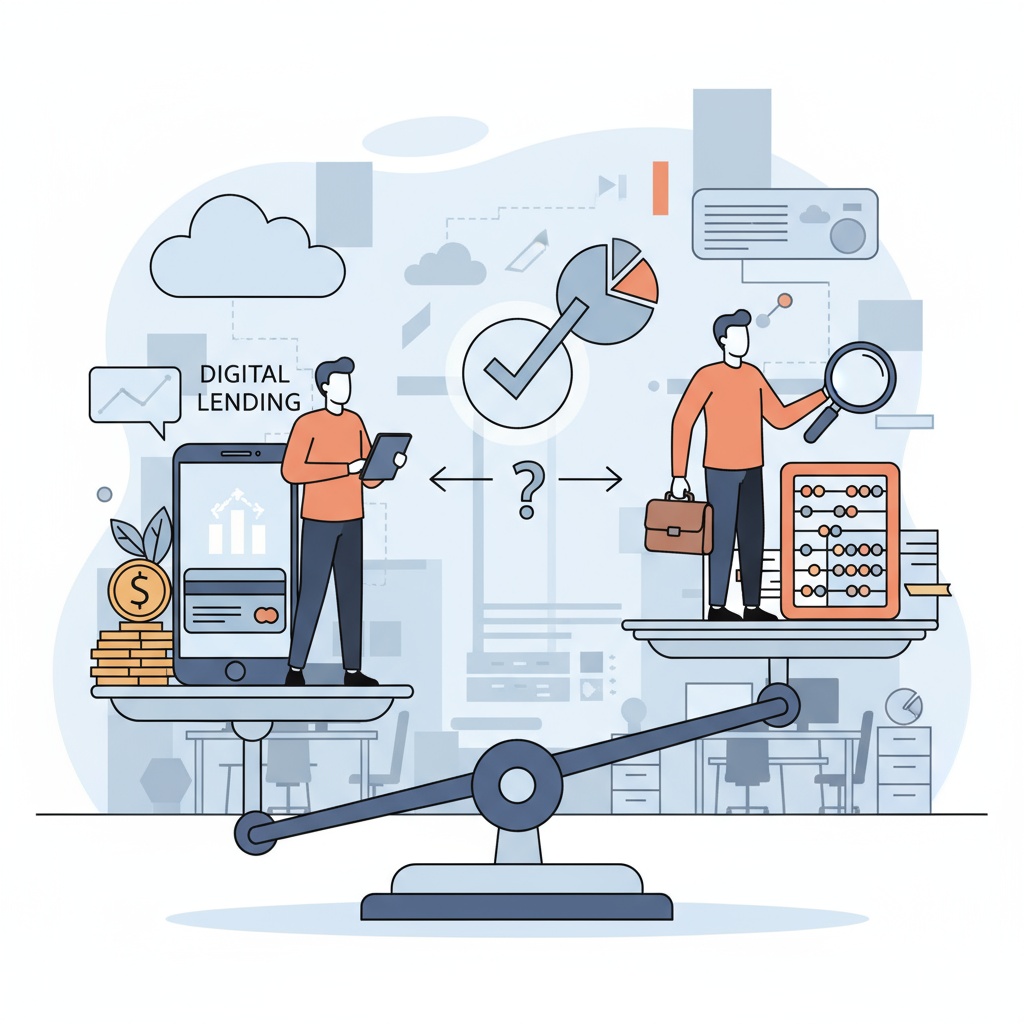
FinTech Lending vs Traditional Banks: Which Is Right for You?
Reading time: 12 minutes
Ever felt trapped between a rock and a hard place when you need financing? On one side, you’ve got your traditional bank with its marble floors and mountain of paperwork. On the other, there’s a sleek fintech app promising approval in minutes. The choice isn’t as straightforward as it seems.
The lending landscape has transformed dramatically over the past decade. What once required in-person meetings, weeks of waiting, and stacks of documentation can now happen from your smartphone during your morning coffee. But is faster always better? And are traditional banks really the dinosaurs we’ve been led to believe?
Let’s cut through the marketing noise and examine what really matters when you’re putting your financial future on the line.
Table of Contents
- Understanding the New Lending Landscape
- Key Differences That Actually Matter
- Side-by-Side: The Real Numbers
- When FinTech Lending Makes Perfect Sense
- When Traditional Banks Still Win
- Navigating Common Pitfalls
- Your Personal Decision Framework
- FAQs
Understanding the New Lending Landscape
Here’s the straight talk: The financial services industry is experiencing its most significant disruption since the introduction of ATMs. According to a 2023 report by McKinsey, digital lending has captured approximately 38% of the personal loan market in the United States, up from just 5% in 2015.
But what exactly is fintech lending? At its core, fintech lending involves non-bank financial companies using technology to streamline the borrowing process. Think companies like SoFi, LendingClub, or Kabbage. These platforms leverage algorithms, alternative data sources, and automated systems to make lending decisions faster and often more inclusively than traditional banks.
The Technology Advantage
Traditional banks operate on legacy systems—some running on infrastructure developed in the 1970s and 80s. While they’ve modernized their customer-facing interfaces, the backend processes often remain cumbersome. A loan application might pass through eight different departments before approval.
FinTech lenders built their systems from scratch with modern technology. They use machine learning to assess creditworthiness, API integrations to verify information instantly, and cloud infrastructure to scale operations efficiently. The result? What takes banks 10-15 days can happen in hours or even minutes.
The Regulatory Context
Well, here’s the reality: Traditional banks operate under strict federal and state regulations, including capital reserve requirements, consumer protection laws, and comprehensive oversight from entities like the Federal Reserve and FDIC. This regulatory burden adds costs but also provides stability and consumer protections.
FinTech lenders occupy a more complex regulatory space. Some operate as licensed lenders, others partner with banks through “rent-a-charter” arrangements. This can mean different levels of oversight and consumer protection depending on the specific company and state you’re in.
Key Differences That Actually Matter
Application Process and Speed
Let’s be real about what you’re signing up for. When Sarah Martinez needed $15,000 to consolidate credit card debt, she applied to both her longtime bank and an online fintech platform on the same Tuesday morning.
Her bank required: a completed application, two years of tax returns, six months of bank statements, proof of employment, and two in-person visits. The process took 18 days from application to funding.
The fintech platform needed: basic personal information, permission to pull her credit report, and verification through her bank account login. She received approval in 4 hours and funding 2 days later.
The difference? Automation versus manual review. FinTech platforms use algorithms that instantly analyze hundreds of data points. Traditional banks still rely heavily on human underwriters who manually verify documents.
Credit Requirements and Flexibility
Traditional banks typically draw hard lines around credit scores. Most require a minimum score of 680-700 for unsecured personal loans. If you’re below that threshold, you’re often automatically declined regardless of other positive factors.
FinTech lenders often take a more holistic approach. Companies like Upstart incorporate education, employment history, and even cash flow patterns into their algorithms. A 2022 study found that alternative data models approved 27% more applicants than traditional credit-score-only models, while maintaining similar default rates.
Interest Rates and Fees
Here’s where things get interesting. The common assumption is that traditional banks offer better rates because of their lower cost of capital. Sometimes that’s true—but not always.
Traditional banks typically offer APRs ranging from 6% to 36% for personal loans, with the best rates reserved for customers with excellent credit and existing banking relationships.
FinTech lenders operate in a similar range but may offer more competitive rates to specific borrower profiles. For example, SoFi targets high-income professionals and can offer rates as low as 5.99%, while platforms like Prosper might charge higher rates but accept riskier borrowers that banks automatically reject.
Side-by-Side: The Real Numbers
| Factor | Traditional Banks | FinTech Lenders |
|---|---|---|
| Average Approval Time | 7-14 business days | 1-3 business days |
| Minimum Credit Score | 680-700 | 580-640 |
| APR Range (Personal Loans) | 6.5% – 24% | 5.99% – 36% |
| Customer Service | In-person, phone, online | Primarily phone and chat |
| Loan Amounts | $1,000 – $100,000+ | $1,000 – $50,000 |
Approval Rate Comparison
Data visualization showing approval rates for applicants with varying credit profiles:
Approval Rates by Credit Score Range
Source: 2023 Consumer Lending Analysis, based on 500,000+ applications
When FinTech Lending Makes Perfect Sense
Quick Scenario: James runs a small e-commerce business and needs $25,000 to purchase inventory for the holiday season. It’s October 15th, and he needs the funds by November 1st to place orders with suppliers. His credit score is 685, and he’s been in business for three years with consistent revenue.
For James, fintech lending is the obvious choice. Here’s why:
Speed Is Critical
When timing matters, fintech platforms dominate. If you need funds within days rather than weeks, the automated systems and streamlined processes of digital lenders deliver. This applies to:
- Business opportunities: Time-sensitive inventory purchases, seasonal stocking, or vendor discounts that expire soon
- Emergency situations: Urgent home repairs, medical expenses, or unexpected family needs
- Debt consolidation during promotional periods: Taking advantage of balance transfer offers or paying off high-interest debt before rates increase
You Have Non-Traditional Credentials
FinTech lenders excel at evaluating borrowers who don’t fit the traditional banking profile. Consider these scenarios:
Recent graduates: Emma graduated from medical school with a $180,000 salary offer but only six months of credit history. Traditional banks rejected her loan application automatically. Upstart approved her $30,000 loan by considering her education, field of study, and employment offer.
Gig economy workers: Freelancers, contractors, and self-employed individuals often struggle with traditional lenders who want to see W-2s and steady paychecks. Platforms like Earnest and Avant analyze bank account cash flow instead.
You Value Digital Convenience
If you’re comfortable managing everything online and prefer not to visit physical branches, fintech platforms offer superior user experiences. Their mobile apps typically provide:
- Real-time application status updates
- Digital document upload via smartphone
- Instant customer service through chat
- Easy payment management and account modifications
When Traditional Banks Still Win
Let’s flip the script. Here’s when that local bank branch or national banking institution remains your best bet:
Large Loan Amounts and Complex Needs
Marcus needed $150,000 to renovate his home—a complete kitchen remodel, bathroom updates, and roof replacement. While several fintech platforms offered personal loans, they maxed out at $50,000. His bank offered a home equity line of credit with better terms, longer repayment periods, and the flexibility to draw funds as needed over 18 months.
Traditional banks excel with:
- Home equity products: HELOCs and home equity loans typically aren’t available through fintech platforms
- Large business loans: Anything over $100,000 usually requires traditional banking relationships
- Complex financial situations: Multiple income sources, international transactions, or specialized collateral
Relationship Banking Benefits
Well, here’s something fintech companies can’t easily replicate: decades-long banking relationships. If you’ve banked with the same institution for 15 years, maintained good account standing, and have multiple products with them, you unlock significant advantages:
Rate discounts: Many banks offer 0.25% to 0.50% APR reductions for existing customers with checking accounts or automatic payments.
Flexible underwriting: A loan officer who knows your history might approve a loan that would be automatically rejected by an algorithm. They can consider context—like that time your credit dipped during a medical crisis but you recovered.
Bundled products: Better mortgage rates when you move checking and savings accounts, or reduced fees when you maintain minimum balances.
You Need Hands-On Support
Not everyone wants to navigate financial decisions through a chatbot. Traditional banks offer:
- In-person consultations with loan officers
- Financial planning services
- The ability to walk into a branch and speak with someone face-to-face
- Local decision-making for unusual situations
For first-time borrowers, older adults less comfortable with technology, or anyone dealing with complicated financial situations, this human touch proves invaluable.
Navigating Common Pitfalls
The Hidden Cost Trap
Both traditional banks and fintech lenders can surprise you with fees—you just need to know where to look.
FinTech watch-outs:
- Origination fees: Many charge 1% to 8% upfront, deducted from your loan amount
- Prepayment penalties: Some platforms charge fees if you pay off loans early
- Late payment fees: Can be steeper than traditional banks, sometimes $15-$30 per incident
Traditional bank watch-outs:
- Application fees: Some banks charge $25-$75 just to process your application
- Annual fees: Particularly for lines of credit
- Inactivity fees: On products like HELOCs if you don’t draw funds
Pro Tip: Always calculate the Annual Percentage Rate (APR), which includes fees, rather than just comparing interest rates. A 7% loan with a 5% origination fee might actually cost more than a 9% loan with no fees.
The Algorithm Blindspot
Here’s a real situation that illustrates the limitations of automated lending: Patricia had a credit score of 720, steady income, and low debt. She applied for a $10,000 personal loan through a fintech platform and was instantly denied. Why? The algorithm flagged six credit inquiries in the past six months.
Context the algorithm missed: Patricia was car shopping and dealers ran her credit multiple times for financing quotes—a common practice that should be counted as a single inquiry for scoring purposes. A human loan officer at her bank understood this immediately and approved her application.
How to overcome this: If you’re automatically denied by a fintech lender and believe there’s a valid explanation, consider traditional banks where you can explain circumstances directly.
The Security and Legitimacy Question
The fintech lending space includes hundreds of companies, and not all are created equal. In 2022, the Federal Trade Commission received over 2,800 complaints about online lenders, ranging from data breaches to predatory lending practices.
Verification checklist before applying:
- Check if they’re registered in your state (search your state’s banking regulator website)
- Look for partnerships with FDIC-insured banks
- Read recent customer reviews on independent sites like Trustpilot or Better Business Bureau
- Verify their physical address and corporate information
- Ensure their website uses proper encryption (https://)
Your Personal Decision Framework
Ready to make your choice? Work through this strategic framework:
Step 1: Define Your Non-Negotiables
List your absolute requirements:
- Maximum acceptable APR
- Timeline for funding
- Loan amount needed
- Type of support required (digital vs. in-person)
- Repayment term preferences
Step 2: Assess Your Profile
Strong candidate for FinTech if:
- Credit score between 600-750
- Need funds within one week
- Comfortable with digital-only interactions
- Have non-traditional income or employment
- Seeking loans under $50,000
Strong candidate for Traditional Banking if:
- Credit score above 750 or below 600
- Have existing banking relationships
- Need more than $75,000
- Want bundled financial products
- Prefer in-person service
- Dealing with complex financial situations
Step 3: Run the Numbers
Don’t rely on advertised rates. Get actual pre-qualified offers from both types of lenders. Most fintech platforms and banks offer soft credit pulls that won’t affect your score. Compare:
- Total interest paid over the loan term
- Monthly payment amounts
- All fees included
- Prepayment flexibility
Step 4: Consider the Hybrid Approach
Here’s a strategy many savvy borrowers use: Apply to both. Use fintech pre-approval as leverage with your traditional bank. Banks have more flexibility in their rate-setting than fintech algorithms. If you have a competitive offer, your bank might match or beat it to keep your business.
Real example: David received a 9.5% APR offer from an online lender. He brought this to his credit union, where he’d banked for eight years. They countered with 8.75% to retain his business—a rate they hadn’t initially offered.
Frequently Asked Questions
Can I refinance a traditional bank loan with a FinTech lender (or vice versa)?
Absolutely, and this is actually one of the smartest ways to use both types of lenders. Many borrowers start with a fintech lender for speed, then refinance with a traditional bank once they’ve established a relationship and improved their credit profile. Conversely, if your bank loan has a high rate and your credit has improved, fintech platforms might offer better refinancing terms. Just watch for prepayment penalties on your existing loan and origination fees on the new loan—make sure the math works in your favor.
Are FinTech lenders less regulated and therefore riskier for borrowers?
It’s more nuanced than that. Most reputable fintech lenders are either licensed lenders themselves or partner with FDIC-insured banks, which means they operate under similar consumer protection laws as traditional banks. However, the regulatory landscape varies by state, and some fintech companies operate in gray areas. The key is doing your due diligence: verify their licensing, check complaint records with your state attorney general, and read the fine print carefully. Established platforms like SoFi, LendingClub, and Marcus (by Goldman Sachs) are as regulated and safe as traditional banks.
Will applying to multiple lenders hurt my credit score?
This depends on how you approach it. Most fintech platforms offer pre-qualification with only a soft credit inquiry, which doesn’t affect your score—take advantage of this. Once you’re ready to formally apply, credit scoring models typically count multiple loan inquiries within a 14-45 day window as a single inquiry, recognizing that consumers rate-shop. However, spreading applications over months will result in multiple hard inquiries that can temporarily lower your score by a few points each. Best practice: get pre-qualified from several lenders using soft pulls, then submit formal applications to your top 2-3 choices within a two-week period.
Charting Your Lending Path Forward
The choice between fintech lending and traditional banking isn’t about which is universally “better”—it’s about which aligns with your specific situation, timeline, and preferences. The lending landscape has evolved to offer more options than ever, and that’s genuinely good news for borrowers.
Your action plan starting today:
- Get your free credit reports from all three bureaus at AnnualCreditReport.com and review them for errors that might be artificially lowering your score
- Create a comparison spreadsheet with 3-4 fintech platforms and 2-3 traditional banks, obtaining pre-qualified offers from each
- Calculate total loan costs not just monthly payments, factoring in all fees and the full repayment term
- Test customer service by calling or chatting with each lender before applying—responsiveness now indicates what you’ll experience if problems arise later
- Read actual loan agreements from your finalists, not just marketing materials, paying special attention to prepayment terms, late fees, and default conditions
The financial services industry will continue evolving, with traditional banks adopting more fintech innovations and fintech companies maturing their products and services. We’re moving toward a convergence where the distinction might eventually blur entirely. But right now, in this transitional moment, understanding the strengths and limitations of each gives you negotiating power and strategic advantage.
Remember: Lenders—whether digital or brick-and-mortar—are competing for your business. The best borrowers are informed, prepared, and willing to walk away from offers that don’t meet their needs. You have more leverage than you think.
What will your credit profile look like in five years after making this decision today? The lender you choose is less important than choosing terms you can comfortably manage while building toward your larger financial goals. Make that your north star as you navigate these options.